





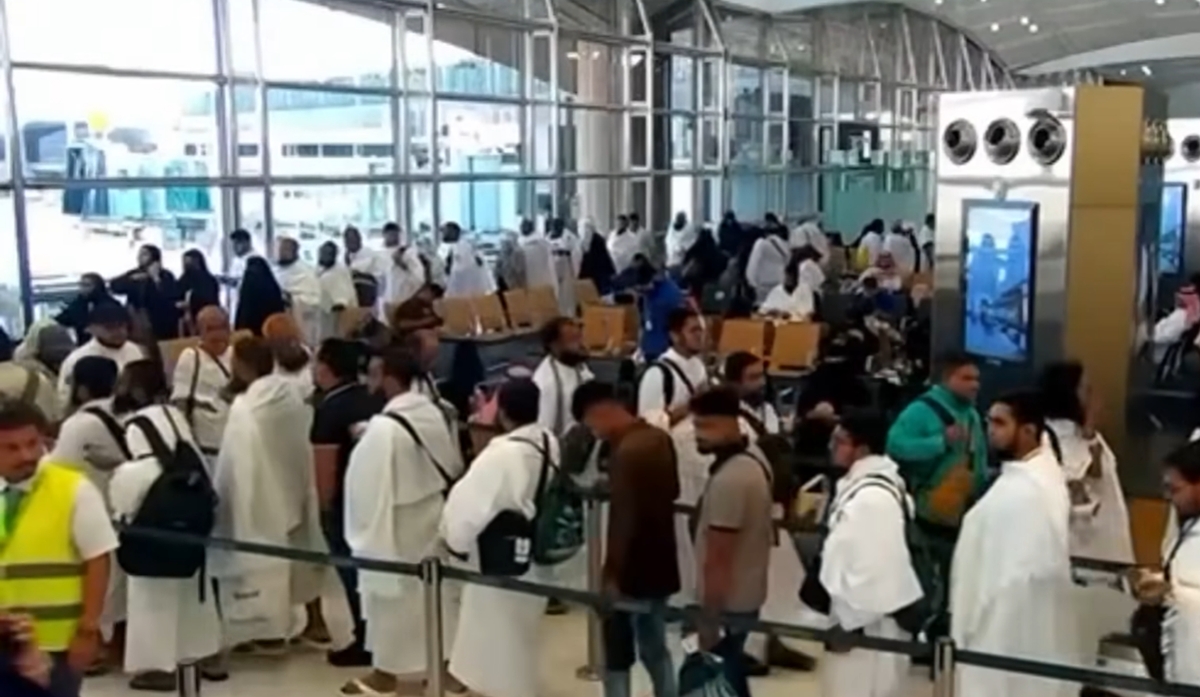
RIYADH, Saudi Arabia — Oct 10, 2026 – Major escalation in regional hostilities reached a tragic threshold when a high-impact strike directly hit King Khalid International Airport in Riyadh, killing at least 13 people and injuring more than 300 others. Officials and international media have described the strike as the single deadliest attack on Saudi territory in over a decade.
Terminal 3 Hit directly During Peak Hours
The strike targeted Terminal 3 of Riyadh’s main international hub, a crowded passenger terminal devoid of any military facilities. Eyewitnesses reported a sudden, massive explosion that shook the entire terminal complex, triggering panic and chaotic evacuations as alarms sounded throughout the airport.
- Casualties: At least 13 confirmed fatalities, including international travelers and staff. Over 300 individuals suffered injuries ranging from shrapnel wounds to severe trauma.
- Disruption: Aviation authorities immediately suspended all flights into and out of King Khalid International Airport, diverting incoming air traffic to regional hubs and locking down the perimeter.
Coalition Response and Rising Geopolitical Strain
The attack came amid an intensified surge in strikes across the Arabian Peninsula. The Saudi-led military coalition strongly condemned the strike, characterizing it as a blatant violation of international humanitarian law targeting innocent civilians.
- International Reactions: U.S. officials condemned the attack, confirming that an American citizen was among those killed. Washington indicated it is evaluating potential military options and diplomatic measures to address the sharp escalation.
- Aviation Impact: Travel advisories were issued globally as major airlines suspended flights to the capital, and flight tracking data showed complete airspace closures surrounding Riyadh’s primary air corridor.
With airport operations halted and emergency services responding to mass casualties across capital hospitals, the attack marks a significant inflection point. Pressure is rapidly mounting on regional leaders and international powers to either achieve an immediate de-escalation or brace for broader military consequences across key Middle Eastern transport and economic corridors.
Military spokespersons for the Houthis claimed responsibility for launching ballistic missiles and drones targeting the airport complex in Riyadh.
Possible Reasons for the Attack
- Escalation in the Yemen Conflict
- Saudi Intervention: Saudi Arabia leads a military coalition supporting Yemen’s internationally recognized government against the Houthis. The strikes were launched in direct response to Saudi military operations and air campaigns against Houthi-controlled territories.
- Economic and Infrastructure Pressure
- Targeting Critical Hubs: By striking major civil aviation and transport infrastructure in the capital, the Houthis aim to exert high-level economic pressure on the Saudi government, disrupt air traffic, and force a halt to military actions.
- Regional Geopolitical Spillover
- Broader Gulf Instability: The escalation is tied to wider regional conflict dynamics across the Middle East, with the Houthis leveraging long-range strike capabilities to signal their influence over critical maritime and aviation corridors.
Despite the fact that Saudi Arabia possesses some of the most advanced air and missile defense systems in the world, it was still not very foreseeable to expect those types of sudden large-scale attacks on airports. After such a devastating incident, Saudi officials will be under pressure to strengthen the security throughout the whole country – not just airports and public places but especially critical infrastructure and military bases.


Join - React & Comment!
Comments